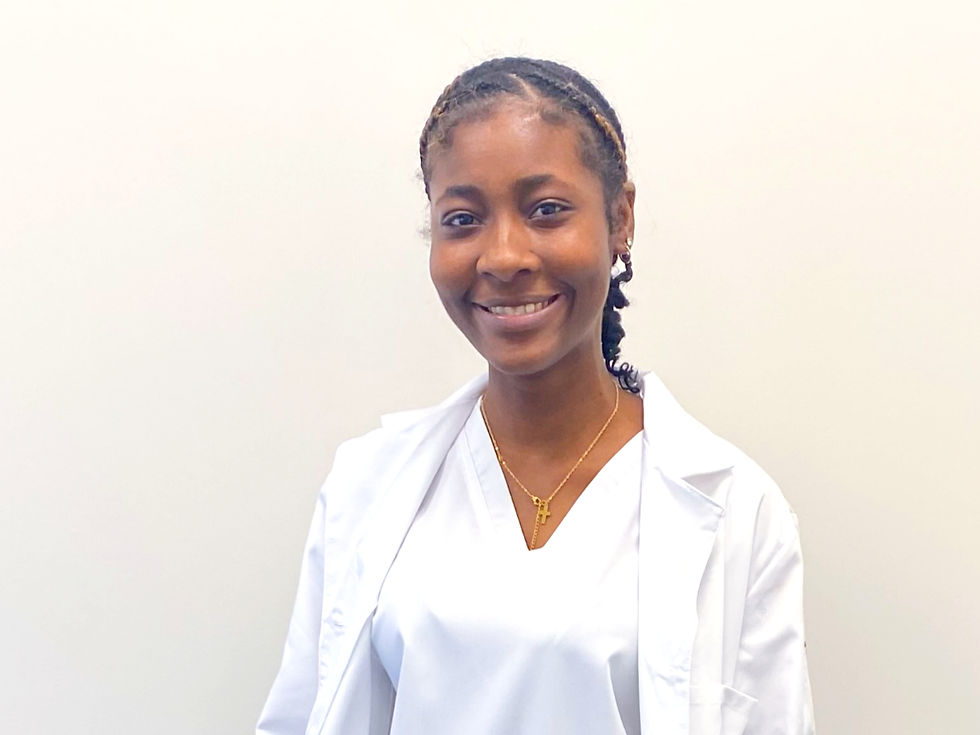
Lydia Wrote to the Dean


Lydia, 25, grew up in her parents' internet café and print shop in Ethiopia, teaching herself to type and looking things up about how all the technology around her worked. Her father, a teacher, was in favor of all of it — he wanted his children to go find things out for themselves.
That's where the career ambition starts. Lydia came to the US on her own in 2022. She earned an associate degree in data science at Montgomery College and is now working toward a bachelor's in data analytics at Western Governors University.
Ask her what an analyst does and she calls it storytelling: take an organization’s raw data, clean and organize it, analyze it to identify patterns, trends, and problems, then communicate those insights so that decision-makers can understand and act on them.
The semester she gained
She used that same method to earn her first degree.
Lydia worked in restaurants and customer service through most of her associate degree. Wanting to graduate faster, she planned a heavier course load than her academic advisor was willing to approve. Left there, that decision would have cost her a semester (of tuition, of class attendance, of expensive books…).
So she went and read the college's own policies and built a case from them. Then she wrote to the dean, laying out what she intended to take and why she could manage the extra coursework. The dean came back with questions — how, specifically, was this going to work? Lydia answered with a detailed, structured plan.
The dean approved it. Lydia graduated a semester early.

That semester became an unpaid internship, which she credits with getting her the one she holds now at WMATA, working in digital modernization.
What the work actually looks like

At WMATA she's been sharpening her technical skills, working in Power BI and Power Apps. But when she describes what's mattered most, the technical part isn't where she lands.
"What's been most valuable to me is getting exposure to the full process. Not just building something technically, but understanding the business need behind it, collaborating with different teams, and seeing how the work can ultimately improve operations and support the public."
That tracks with how she talks about the job generally. The technical skills she’s building are the access point to her desired field. The harder part is saying what you found, out loud, to people who have to act on it. She describes herself as an introvert and says becoming a confident communicator is the part she's had to work at hardest.
What New Futures was useful for
For Lydia, two things immediately come to mind: a self-advocacy workshop at Scholars Weekend, and a campus resource mapping session at Scholar Orientation. More than a year later she can name both, and point to where she used them.
Then there's the scholarship, which was the piece that unlocked the rest of her plan. She'd been working restaurant shifts to make ends meet, so covering tuition gave her those hours back. She spent them instead on the heavier course load that led to her early graduation, then spent that semester on the internship that led to WMATA.
What she's building
Lydia is continuing at Western Governors while she works. She says she’s paying close attention to AI — her read is that it won't remove the work, it'll reshape it, and being close to it now is an advantage rather than a threat.
She also learned to swim this year. A six-week class, something she'd wanted to do for a long time. She's not good at it yet and says so cheerfully. That's a change she made on purpose. She used to steer clear of anything she didn't already know how to do, but she’s since learned to reframe challenge as opportunity. What changed, she says, was noticing how many people simply start and figure it out from there. “I’d rather challenge myself to learn something new than say ‘I can’t do it.’”
The ask
Lydia read the policies, wrote the letter, and answered the dean's questions with a plan. Nobody did that for her.
What she needed was for tuition to stop being the first problem she solved every semester.